
Addressing immune aging for healthier lives.

Identify and remove barriers
Bring researchers, clinicians, companies, industry, funders, and policymakers together to identify and address bottlenecks and develop collaborative projects and partnerships around shared needs in thymus and immune rejuvenation.

Mobilize Research Funding
Connect important work with the funding it needs, and develop partnerships and funding approaches for promising research, shared resources, and projects that fall through gaps in existing support.

Build public understanding and support
Help more people understand why immune aging matters and what addressing it could make possible. Build support among the public, funders, and policymakers for research and its development into treatments.
Your thymus is central to adaptive immunity.
Your thymus produces and educates T cells, building a diverse repertoire that helps your body fight infections and recognize cancerous cells. It also helps establish immune tolerance—limiting attacks on your own healthy tissues.

Aging, illness, and treatment can impair thymic function.
With age, working thymic tissue gradually gives way to fat, reducing new T-cell production. Severe infections, physiological stress, chemotherapy, and radiation can also damage the thymus and impair its ability to replenish the immune system.

Declining thymic function limits immune renewal.
Existing T cells can multiply, but they cannot replace receptor diversity that has been lost. Reduced thymic output can limit responses to unfamiliar threats and slow the rebuilding of immunity after treatments that deplete immune cells.

Restoring thymic function could help rebuild immunity.
Researchers are developing medicines and cell therapies to regenerate thymic tissue or recreate its function. Potential applications include immune recovery after cancer treatment, improved responses to vaccines and cancer immunotherapy, and treatment of age-related immune decline.
Aging, illness, and treatment can impair thymic function.
With age, working thymic tissue gradually gives way to fat, reducing new T-cell production. Severe infections, physiological stress, chemotherapy, and radiation can also damage the thymus and impair its ability to replenish the immune system.
Declining thymic function limits immune renewal.
Existing T cells can multiply, but they cannot replace receptor diversity that has been lost. Reduced thymic output can limit responses to unfamiliar threats and slow the rebuilding of immunity after treatments that deplete immune cells.
Restoring thymic function could help rebuild immunity.
Researchers are developing medicines and cell therapies to regenerate thymic tissue or recreate its function. Potential applications include immune recovery after cancer treatment, improved responses to vaccines and cancer immunotherapy, and treatment of age-related immune decline.
Explore
Introduced legistlation
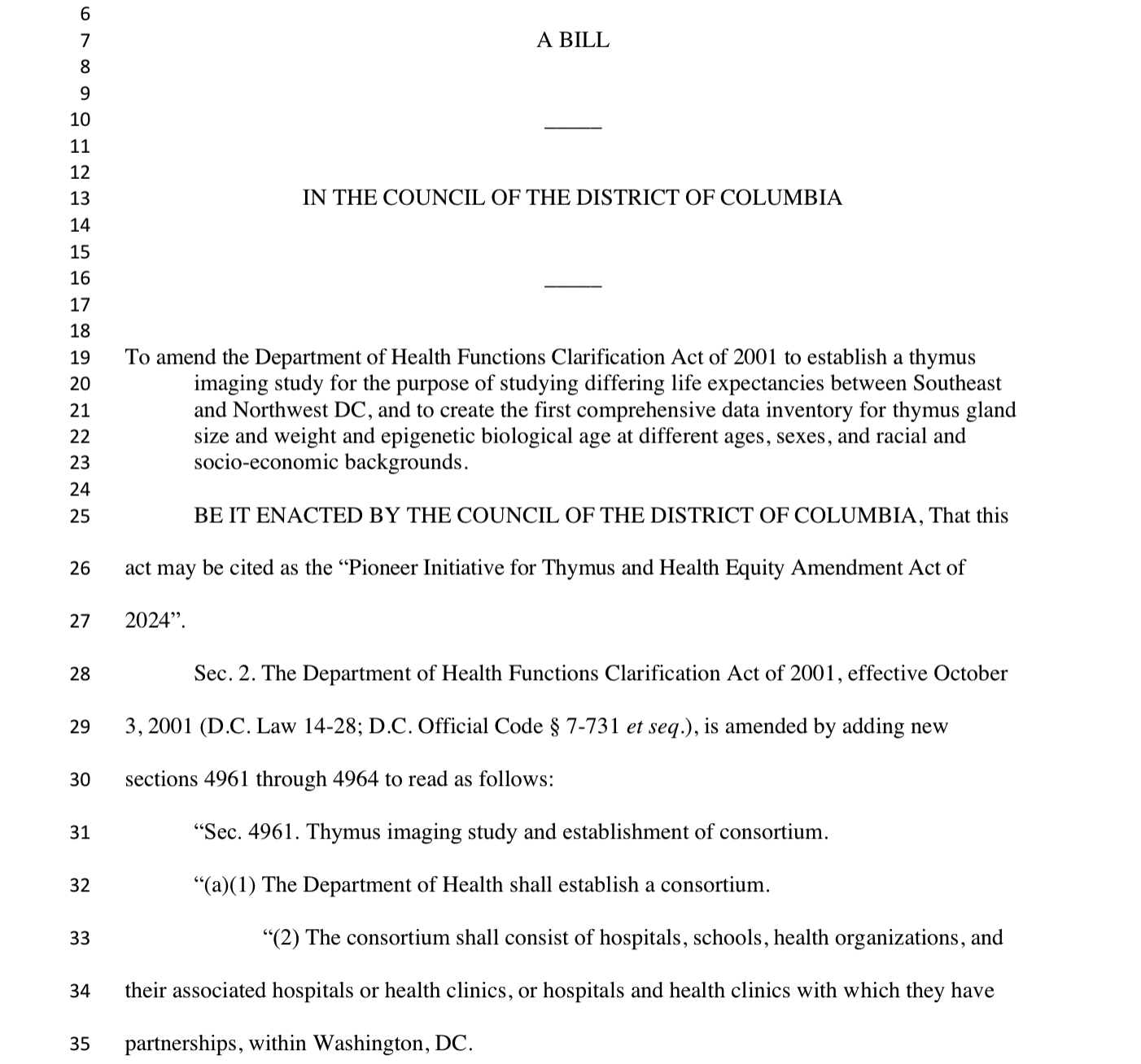
A thymus imaging study to study differing life expectancies and create the first comprehensive data inventory for thymus gland size and weight, among other things.
Thymus Data Sets

Find and explore data for studying thymic development, aging, regeneration, tissue organization and disease.
